A vast layer of biology,
hidden in plain sight.
Across every genome lie thousands of very small proteins, long overlooked. ORFeus is a European doctoral network decoding this dark proteome and what it could mean for cancer and immunity.
doctoral
leading
research groups
industry and
research partners
international
advisers
What is the dark proteome?
We can sequence a human genome in a day. Yet we are still largely blind to part of it. Hidden among the sequences once assumed to be non-coding are thousands of very small proteins, called microproteins, that our methods have long struggled to detect.
They are easy to miss but far from trivial. Known examples regulate metabolism, shape how an embryo forms, and have even been refined into potent drugs. A first task for ORFeus is to build better tools to find and study them at all. With those tools, the network reads which hidden sequences a cell is really turning into protein, works out what those microproteins do, and asks where they matter most, especially in cancer and the immune system. Much of this is still unproven. Creating the methods and the evidence to test it is exactly what this network is for.
Discover.
ORFeus builds the tools and reference data to detect what the genome really translates, and to see the proteins others miss.
Characterize.
The network works out what these microproteins actually do, from their structures and interactions to their roles across species and in single cells.
Translate.
ORFeus explores how hidden proteins could become candidate targets in cancer, for immunotherapies and vaccines that train the immune system to recognize tumors.
Train at the frontier, across Europe
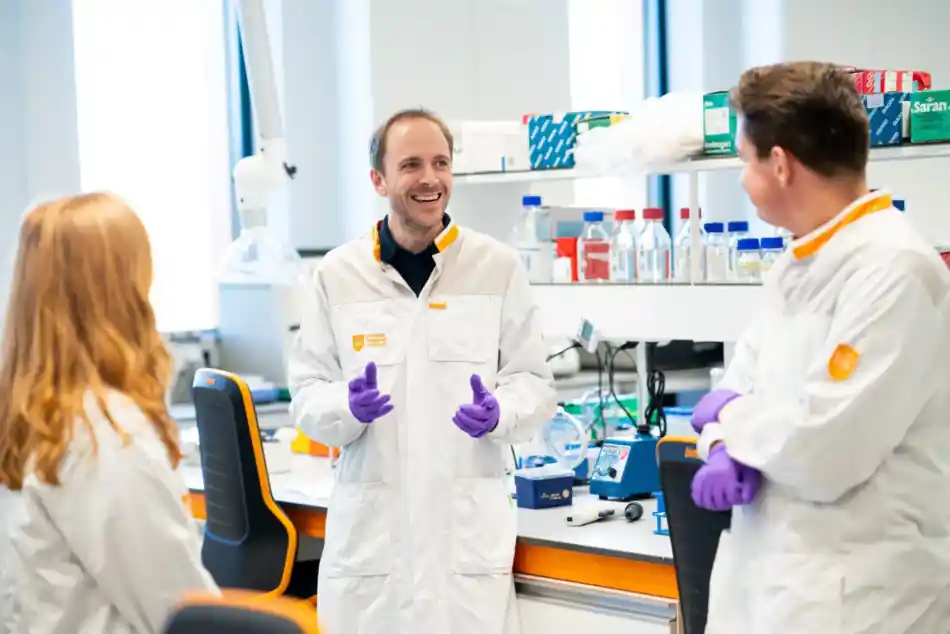
ORFeus is a fully funded doctoral program for 15 researchers. You join one of Europe’s leading labs, take on a project that matters, and train alongside a cohort of peers through residential schools, hands-on workshops, and a placement with an industry partner. You are supported throughout by experienced mentors across more than one institution and across both academia and industry.
Network
Opens 1 October 2026
15 fully funded PhD positions
Apply and rank up to three projects. Projects start in early 2027.
Feed
Michal Bassani-Sternberg awarded the Robert Wenner Prize
More great news from the consortium! Michal Bassani-Sternberg, Associate Professor at the University of Lausanne and one of the fifteen ORFeus principal investigators, has been awarded the Robert Wenner Prize 2026 by the Swiss Cancer League, one of Switzerland’s most prestigious distinctions for young researchers in oncology.
Simon Elsässer receives Germany’s most prestigious research award
We are proud to share that Simon Elsässer, Professor of Synthetic Biology at the University of Freiburg and one of the fifteen ORFeus principal investigators, has been formally awarded an Alexander von Humboldt Professorship, Germany’s highest-valued international research prize.
Over 1,700 new proteins discovered in the human dark proteome
A landmark study published today in Nature by the TransCODE Consortium reveals a hidden layer of the human proteome. Analyzing more than 95,000 mass spectrometry experiments, the team found protein-level evidence for over 1,700 microproteins encoded by non-canonical open reading frames, sequences that were not previously recognized as protein-coding.
Danny Sahtoe receives the NVBMB Prize for protein design
Congratulations to Danny Sahtoe! The group leader at the Hubrecht Institute in Utrecht and one of the fifteen ORFeus principal investigators has been unanimously selected for the 2025 NVBMB Prize by the Netherlands Society for Biochemistry and Molecular Biology.
ILLUMINE wins the Cancer Grand Challenge on the dark proteome
Huge news for the dark proteome field! A global team led by Reuven Agami, Professor of Oncogenomics at the Netherlands Cancer Institute and one of the fifteen ORFeus principal investigators, has been awarded a Cancer Grand Challenges grant of up to $25 million to tackle the dark proteome in cancer.