Scherm­afbeelding 2026 08 03 om 13.04.57
Research

ORFeus is organized around three goals:

Discover the dark proteome, characterize what it does, and test what it means for disease, starting with cancer and the immune system.
The challenge

The hardest part of studying microproteins is simply seeing them. Standard gene annotation was not built to flag very short coding sequences, and standard proteomics was not built to detect very small proteins. ORFeus closes that gap by developing and combining methods that each capture part of the picture: ribosome profiling to read what a cell is actively translating, mass-spectrometry proteomics and proteogenomics to confirm the proteins are really there, and immunopeptidomics to capture the fragments displayed to the immune system. Advanced machine learning ties the evidence together and helps decide which candidates are worth pursuing.

Three work packages

WP1 (discover)

Uncovering the dark genome and proteome. 

First, build the map. WP1 develops the experimental and computational tools to detect non-canonical translation reliably and at scale, and produces the reference datasets the rest of the network depends on: new ribosome-profiling methods, cross-species prediction, and large catalogs of condition-specific translation.

WP2 (characterize)

Understanding smORF and dark proteome functions. 

Next, ask what they do. WP2 moves from detection to function: mapping how microproteins interact and fold, designing molecules to switch their activity on or off, reading their evolutionary signatures for clues to importance, and resolving translation down to single cells.

WP3 (translate)

Investigating the dark proteome in cancer and immunology. 

Finally, put it to work. WP3 focuses on disease: how cancer-specific and stress-induced microproteins are displayed to the immune system, which ones make credible neoantigens, and how that knowledge could feed immunotherapies and vaccines.

15 doctoral projects

The network’s science is carried by 15 connected PhD projects. Each is hosted by a different group, co-supervised across institutions, and linked to a partner. They are designed to feed one another: data and tools from one project become the inputs for several others.

Tag
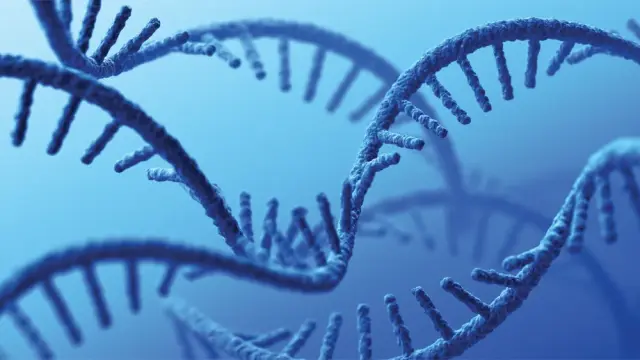
Rendering of a DNA double helix

University of Southampton (UK)

Predicting hidden genes across species

Can a machine learn to recognize a real microprotein gene from its DNA alone? This project builds AI models that predict which short ORFs are genuinely translated, trained on data from across the network and released as open tools for the wider community.

Supervisor: Owen Rackham

Co-supervisor: Uwe Ohler
Dc02

Max Delbrück Center, Berlin (DE)

Reading translation one molecule at a time

What can single molecules tell us about translation that bulk methods cannot? This project develops new ways to read which ORFs are translated from individual RNA molecules, resolving how different transcript forms carry different proteins.

Supervisor: Uwe Ohler

Co-supervisor: Eivind Valen

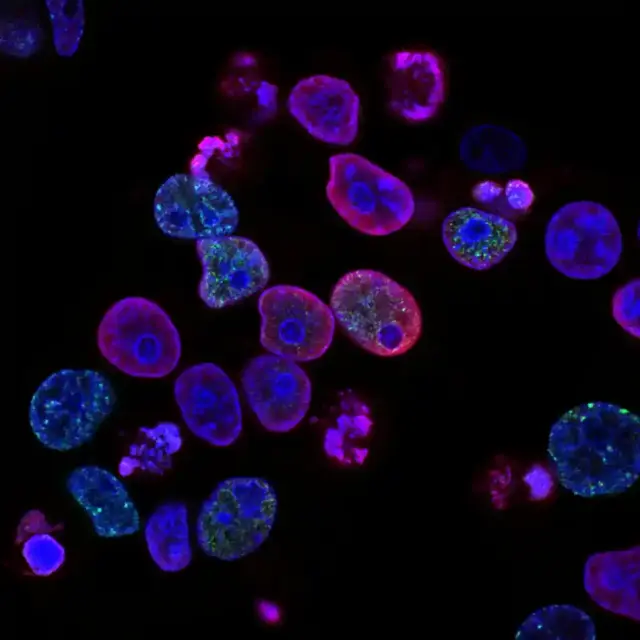
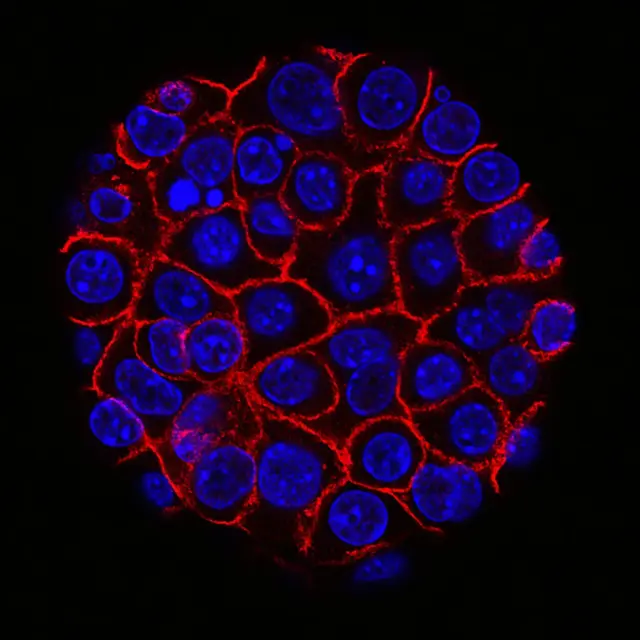
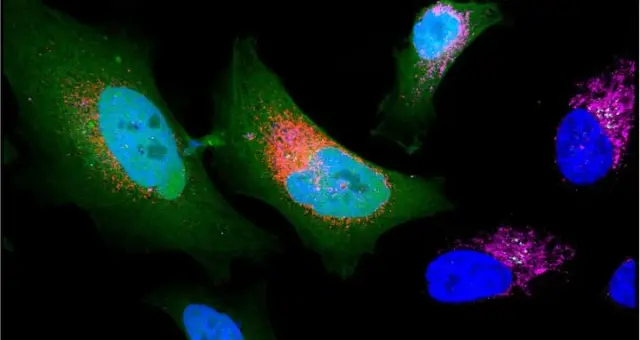
Fluorescence micrograph of stained cells

University of Oslo (NO)

Finding rare proteins in a sea of data

Most translation events are common enough to detect in a single experiment, but what about the rare ones? This project mines more than 15,000 public ribosome profiling datasets to find translation events that only appear under specific conditions or in specific species.

Supervisor: Eivind Valen

Co-supervisor: Pasha Baranov

Rack of prepared sample vials

Institute of Cancer Research, London (UK)

Tracking microproteins during infection

When a bacterium infects a cell, both host and pathogen produce microproteins. This project maps that landscape using dual proteomics and ribosome profiling, asking which microproteins shape the course of infection.

Supervisor: Jyoti Choudhary

Co-supervisor: Petra Van Damme

Gloved hands transferring a sample into a tube

University of Freiburg (DE)

Capturing the proteins cells send to each other

Many microproteins are secreted from cells, but current methods largely miss them. This project develops chemical tagging approaches to capture secreted microproteins and identify the cell-surface receptors they bind to.

Supervisor: Simon Elsässer

Co-supervisor: Jyoti Choudhary

Dc06

Hubrecht Institute (KNAW), Utrecht (NL)

Designing molecules to control microproteins

Once you find a microprotein, how do you work out what it does? This project uses computational protein design to create synthetic molecules that bind specific microproteins and switch their activity on or off.

Supervisor: Danny Sahtoe

Co-supervisor: Owen Rackham

Dc07

University of Leeds (UK)

When non-coding RNA makes protein

Long non-coding RNAs were long assumed not to make proteins, but some of them do. This project investigates the rules that govern when and how ribosomes translate these unexpected transcripts, focusing on neuronal development.

Supervisor: Julie Aspden

Co-supervisor: M. Mar Albà

Dc08

Hospital del Mar Research Institute (HMRIB-CERCA), Barcelona (ES)

Using evolution to predict function

Evolution leaves traces. If a microprotein has been conserved across species, it is more likely to matter. This project uses evolutionary analysis and functional screens to predict which newly discovered microproteins are biologically important.

Supervisor: M. Mar Albà

Co-supervisor: Simon Elsässer

Dc09

Hubrecht Institute (KNAW), Utrecht (NL)

Translation, one cell at a time

Different cells in the same tissue can translate the same gene differently. This project develops a new method that combines CRISPR editing with single-cell ribosome profiling to study translation regulation one cell at a time.

Supervisor: Alexander van Oudenaarden

Co-supervisor: Julie Aspden

Dc10

Ghent University (BE)

Mapping microprotein function by stability

How does removing a single microprotein change the behavior of a whole proteome? This project uses thermal proteome profiling in bacteria to measure how protein stability and interactions shift when a microprotein is absent, building a functional map of the microproteome.

Supervisor: Petra Van Damme

Co-supervisor: Danny Sahtoe

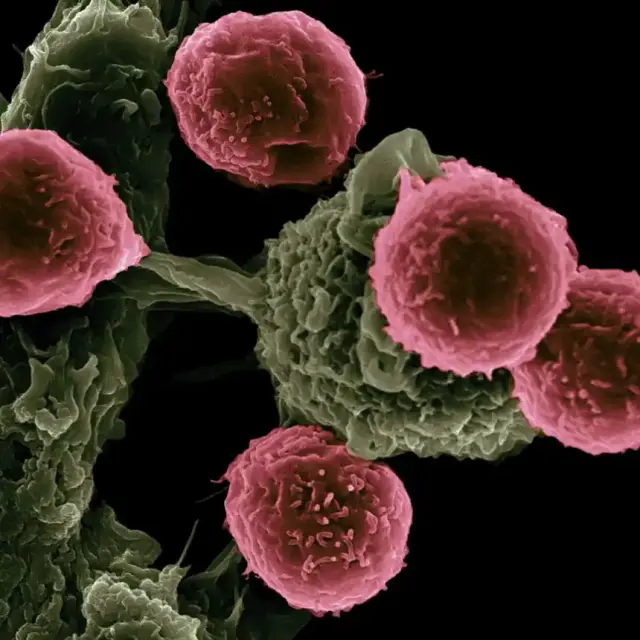
Coloured scanning electron micrograph of cells

University of Dundee (UK)

Hidden proteins in HPV-driven cancer

HPV rewrites the host cell’s RNA landscape, and some of the resulting hybrid transcripts may encode new proteins. This project maps non-canonical translation in HPV-driven cancers and tests whether the resulting peptides can be recognized by the immune system.

Supervisor: Nicola Ternette

Co-supervisor: Sebastiaan van Heesch

Dc12

University College Cork (IE)

How genetic variants change translation

Common genetic variants can change which proteins a cell makes, even outside the known gene catalog. This project studies how variation in non-coding regions alters translation, and which of these changes are relevant in cancer.

Supervisor: Pasha Baranov

Co-supervisor: Alexander van Oudenaarden

Dc13

Princess Máxima Center, Utrecht (NL)

Wrong amino acids, new immune targets

What happens when cancer cells start reading their genome in unexpected ways? This project studies how tumour cells switch on a hidden layer of protein coding under stress, and what the resulting dark proteome means for cancer biology and immunotherapy. The work runs alongside ILLUMINE, the Cancer Grand Challenges project on the dark proteome.

Supervisor: Sebastiaan van Heesch

Co-supervisor: Reuven Agami

Dc14

Netherlands Cancer Institute (NKI-AVL), Amsterdam (NL)

Finding the switches in antigen display

For a microprotein to become an immune target, the cell must process and display it on its surface. This project uses CRISPR screens to find the factors that control this display, identifying regulators that could be targeted to make tumours more visible to the immune system.

Supervisor: Reuven Agami

Co-supervisor: Michal Bassani-Sternberg

Dc15

University of Lausanne (CH)

Teaching the immune system to see hidden proteins

Which hidden peptides actually reach the cell surface and stay there long enough for the immune system to find them? This project combines immunopeptidomics with machine learning to predict which cryptic peptides make credible targets for cancer immunotherapy.

Supervisor: Michal Bassani-Sternberg

Co-supervisor: Uwe Ohler