15 fully funded positions
Each position is a full employment contract with salary and allowances set by the Marie Skłodowska-Curie Actions, including a living allowance, a mobility allowance, and a family allowance where applicable.

Each position is a full employment contract with salary and allowances set by the Marie Skłodowska-Curie Actions, including a living allowance, a mobility allowance, and a family allowance where applicable.
You do not apply to each host institution separately. You submit and rank one application per project, up to at maximum three projects, through our central platform.
The application window opens on 1 October 2026. The closing date is 22 October 2026.
The exact start date depends on the project and host institution.
You do not apply to each host institution separately. You apply and rank up to 3 of the 15 projects and put them in order of preference. Every project you rank will consider you, not only your first choice, so ranking more than one project simply widens your options. After the deadline, each project reviews the candidates who ranked it, and the strongest are invited to interview.
ORFeus follows the eligibility rules of the Marie Skłodowska-Curie Actions.
In plain terms:
If you are not sure whether you qualify, the FAQ below explains the mobility rule, or you can contact us before you apply.
The application is designed to be straightforward to complete.
You will be asked for:
Although we ask you to provide information on two referee contacts when you reach the shortlist stage, we request reference letters only if you reach the full interview stage.
Every application is assessed on academic excellence, research potential and motivation, communication skills, and international experience. Recruitment is open, transparent and based on merit, conducted in line with the European Charter for Researchers, with attention to gender balance and equal opportunity.
Open 1 October to 22 October, 23:59 CEST. You are only allowed to apply to up to 3 projects. If you apply to more than 3, all your applications will be ineligible.
From end of October to mid November, we will review, rank and shortlist applicants. If you are not selected, you will receive an immediate message about this. Otherwise, expect communication mid to late November to schedule a first short intro call.
If the intro call was satisfactory, we will schedule a full interview for early December where you will be expected to present some of your research. We will also request references at this point from the referee contacts that you provided.
We aim to let all candidates know before the end of 2026 whether they were selected.
The network’s science is carried by 15 connected PhD projects. Each is hosted by a different group, co-supervised across institutions, and linked to a partner. They are designed to feed one another: data and tools from one project become the inputs for several others.
University of Southampton (UK)
Can a machine learn to recognize a real microprotein gene from its DNA alone? This project builds AI models that predict which short ORFs are genuinely translated, trained on data from across the network and released as open tools for the wider community.
Supervisor: Owen Rackham
Co-supervisor: Uwe Ohler
Max Delbrück Center, Berlin (DE)
What can single molecules tell us about translation that bulk methods cannot? This project develops new ways to read which ORFs are translated from individual RNA molecules, resolving how different transcript forms carry different proteins.
Supervisor: Uwe Ohler
Co-supervisor: Eivind Valen
University of Oslo (NO)
Most translation events are common enough to detect in a single experiment, but what about the rare ones? This project mines more than 15,000 public ribosome profiling datasets to find translation events that only appear under specific conditions or in specific species.
Supervisor: Eivind Valen
Co-supervisor: Pasha Baranov
Institute of Cancer Research, London (UK)
When a bacterium infects a cell, both host and pathogen produce microproteins. This project maps that landscape using dual proteomics and ribosome profiling, asking which microproteins shape the course of infection.
Supervisor: Jyoti Choudhary
Co-supervisor: Petra Van Damme
University of Freiburg (DE)
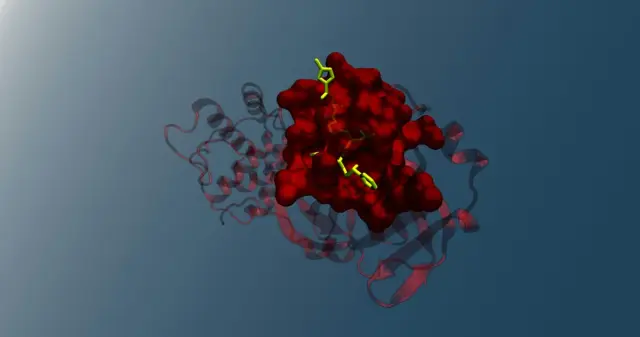
Many microproteins are secreted from cells, but current methods largely miss them. This project develops chemical tagging approaches to capture secreted microproteins and identify the cell-surface receptors they bind to.
Supervisor: Simon Elsässer
Co-supervisor: Jyoti Choudhary
Hubrecht Institute (KNAW), Utrecht (NL)
Once you find a microprotein, how do you work out what it does? This project uses computational protein design to create synthetic molecules that bind specific microproteins and switch their activity on or off.
Supervisor: Danny Sahtoe
Co-supervisor: Owen Rackham
University of Leeds (UK)
Long non-coding RNAs were long assumed not to make proteins, but some of them do. This project investigates the rules that govern when and how ribosomes translate these unexpected transcripts, focusing on neuronal development.
Supervisor: Julie Aspden
Co-supervisor: M. Mar Albà
Hospital del Mar Research Institute (HMRIB-CERCA), Barcelona (ES)
Evolution leaves traces. If a microprotein has been conserved across species, it is more likely to matter. This project uses evolutionary analysis and functional screens to predict which newly discovered microproteins are biologically important.
Supervisor: M. Mar Albà
Co-supervisor: Simon Elsässer
Hubrecht Institute (KNAW), Utrecht (NL)
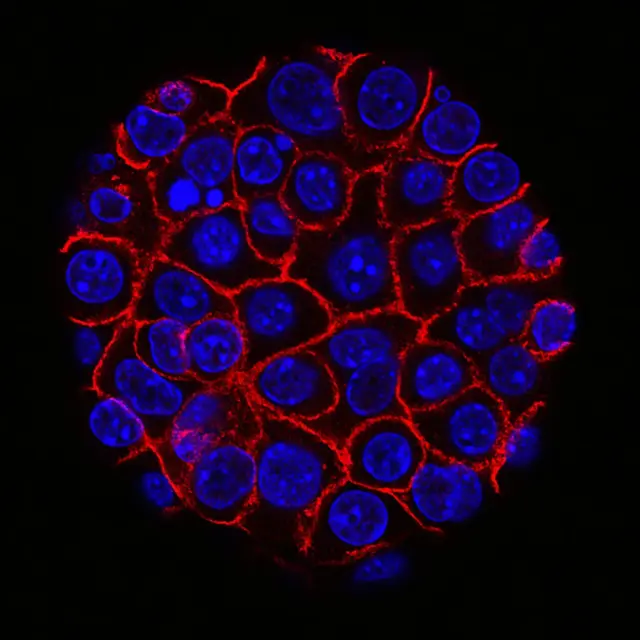
Different cells in the same tissue can translate the same gene differently. This project develops a new method that combines CRISPR editing with single-cell ribosome profiling to study translation regulation one cell at a time.
Supervisor: Alexander van Oudenaarden
Co-supervisor: Julie Aspden
Ghent University (BE)
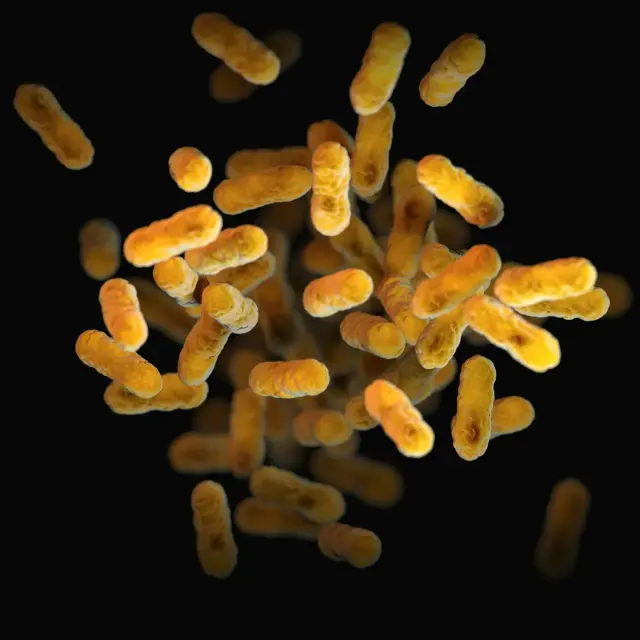
How does removing a single microprotein change the behavior of a whole proteome? This project uses thermal proteome profiling in bacteria to measure how protein stability and interactions shift when a microprotein is absent, building a functional map of the microproteome.
Supervisor: Petra Van Damme
Co-supervisor: Danny Sahtoe
University of Dundee (UK)
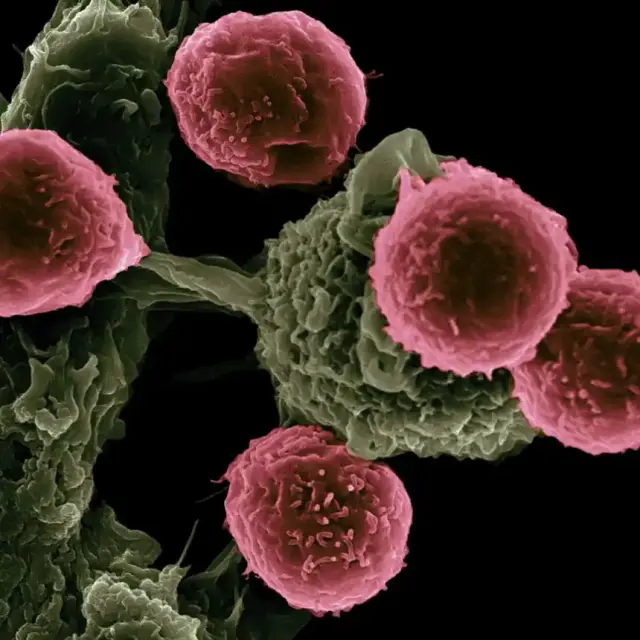
HPV rewrites the host cell’s RNA landscape, and some of the resulting hybrid transcripts may encode new proteins. This project maps non-canonical translation in HPV-driven cancers and tests whether the resulting peptides can be recognized by the immune system.
Supervisor: Nicola Ternette
Co-supervisor: Sebastiaan van Heesch

University College Cork (IE)
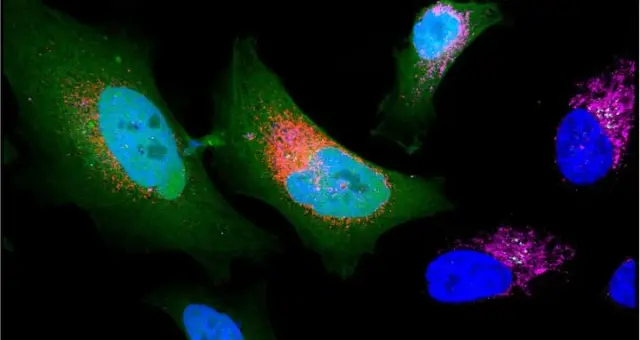
Common genetic variants can change which proteins a cell makes, even outside the known gene catalog. This project studies how variation in non-coding regions alters translation, and which of these changes are relevant in cancer.
Supervisor: Pasha Baranov
Co-supervisor: Alexander van Oudenaarden
Princess Máxima Center, Utrecht (NL)
What happens when cancer cells start reading their genome in unexpected ways? This project studies how tumour cells switch on a hidden layer of protein coding under stress, and what the resulting dark proteome means for cancer biology and immunotherapy. The work runs alongside ILLUMINE, the Cancer Grand Challenges project on the dark proteome.
Supervisor: Sebastiaan van Heesch
Co-supervisor: Reuven Agami
Netherlands Cancer Institute (NKI-AVL), Amsterdam (NL)
For a microprotein to become an immune target, the cell must process and display it on its surface. This project uses CRISPR screens to find the factors that control this display, identifying regulators that could be targeted to make tumours more visible to the immune system.
Supervisor: Reuven Agami
Co-supervisor: Michal Bassani-Sternberg
University of Lausanne (CH)
Which hidden peptides actually reach the cell surface and stay there long enough for the immune system to find them? This project combines immunopeptidomics with machine learning to predict which cryptic peptides make credible targets for cancer immunotherapy.
Supervisor: Michal Bassani-Sternberg
Co-supervisor: Uwe Ohler
You will continue in Teamtailor, our application system.
How we handle your application data
You qualify if you do not already hold a PhD, will have a master's degree (or an equivalent qualification that gives access to doctoral study) by the time you start, and meet the mobility rule. The mobility rule means you must not have lived, worked or studied in the country of your chosen host institution for more than 12 months in the three years before your recruitment date. Short stays such as holidays do not count. Applicants of any nationality are welcome.
No. MSCA Doctoral Networks are designed for researchers who have not yet obtained a doctoral degree. If you already hold a PhD and are interested in the research areas covered by ORFeus, you are welcome to contact us about other possible collaborations.
The mobility rule is an MSCA eligibility requirement. At the time of recruitment, you must not have resided or carried out your main activity (work, studies) in the country of your host institution for more than 12 months in the 36 months immediately before your recruitment date. Short stays such as holidays, conferences or language courses do not count. The rule is assessed per project, so you may be eligible for a project in one country but not another.
Yes. ORFeus is open to applicants of any nationality, from any country. You will need to meet the general eligibility criteria including the mobility rule. If you are recruited, your host institution will support you with visa and work permit arrangements where needed.
You choose up to three of the 15 projects and rank them in order of preference. Every project you rank will consider your application, not only your first choice. You do not have to rank three; rank only the projects you would genuinely accept. Ranking more than one project widens your options without reducing your chances for your top choice.
The 15 projects span a wide range of disciplines, from computational biology and AI to proteomics, structural biology, evolutionary genomics and immunology. Each project description lists the specific expertise that is most relevant. You do not need to have experience in all of them. What matters is a strong foundation in your area and a genuine interest in learning across disciplines.
English is the working language of the entire network. All training events, supervision meetings, and network activities are conducted in English. Some host institutions may offer or encourage local language courses, but fluency in the local language is not a requirement for any position.
Yes. Every position is a full employment contract, fully funded by the European Union through the Marie Skłodowska-Curie Actions. The salary includes a living allowance, a mobility allowance, and a family allowance where applicable. The exact gross amount depends on the host country.
Each position runs for 36 months (three years). In some cases an extension may be possible depending on the policies of the host institution.
Yes. The fellowship requires a full-time commitment. You are expected to dedicate yourself entirely to your research project and the network's training program for the duration of the contract.
Applications open 1 October 2026 and close on 22 October 2026. Shortlisting and interviews follow in late 2026, decisions are communicated late 2026 to early 2027, and positions start in March 2027. The exact start date depends on the project and host institution.
We confirm receipt of your application. After the deadline, each project reviews the candidates who ranked it. The strongest candidates are shortlisted and invited to a short introductory call, followed by an interview with the project's supervisors. Everyone is informed of the outcome, and candidates who are shortlisted or interviewed receive individual feedback.
No. After reaching the shortlist stage, you will be asked to provide information on up to two reference contacts through the hiring platform. At that point, these contacts will be asked to confirm if they can act as referee. If you then reach the full interview stage, we will ask them for their input.
If you are recruited, your host institution will guide you through the visa and work permit process. We recommend starting this as early as possible once you receive an offer, as administrative timelines vary by country. Make sure to check the specific requirements for your host country well in advance.
A Marie Skłodowska-Curie Actions Doctoral Network is an EU-funded program that brings together universities, research institutes and companies to train doctoral researchers through connected PhD projects on a shared research topic. Each researcher is employed at a host institution but trains across the whole network through schools, workshops, and secondments at partner organizations.
Yes. The network-wide schools, workshops, and other training activities are a core part of the program and are mandatory for all doctoral researchers. They are designed to complement your individual research project. All training costs, including travel and accommodation for network events, are covered.
A secondment is a period you spend working at another organization in the network, typically an industry partner at a different institution. ORFeus includes a mandatory industry secondment of around three months and a shorter academic secondment of around four weeks (primarily virtual). Secondments are fully funded and planned with your supervisors to fit your project and career goals.